1930 E. Rosemeade Pkwy #103 Carrollton, TX 75007

The Truth About Mastic Gum: What It Actually Does for Bad Breath and Gum Disease
February 25, 2026

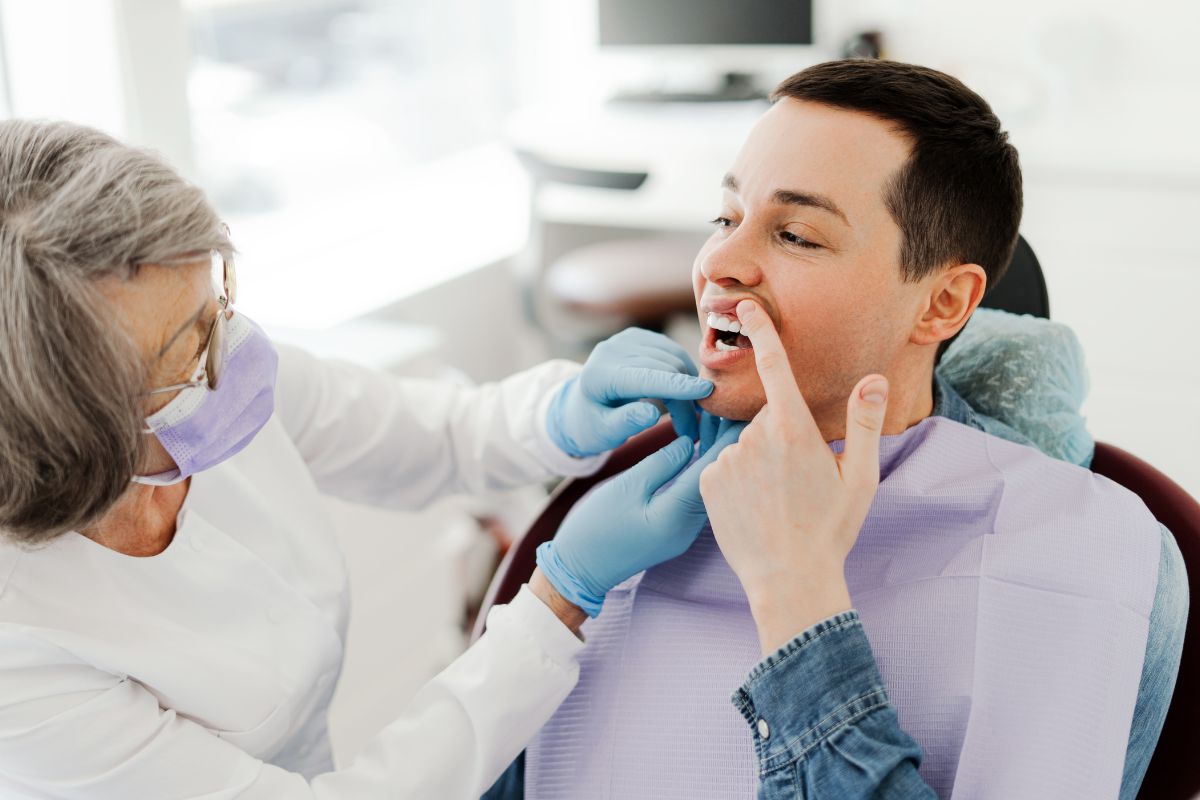
Mastic gum has real oral health benefits, but it’s not the full picture. Find the truth and explore periodontal care in Carrollton at Flink Family Dentistry.
You’ve probably seen mastic gum pop up on wellness blogs, supplement shelves, or social media threads about “natural” oral health remedies. And honestly, the curiosity makes sense. Bad breath and gum disease affect millions of Americans, and if something as simple as a plant resin could help, why not look into it?
But here’s where it gets interesting: some of the claims about mastic gum are actually backed by real science. Others? Not so much. If you’re serious about your gum health and you’re looking for honest answers not hype, this is the right place to start.
What Is Mastic Gum?
Mastic is a natural resin that comes from the mastic tree (Pistacia lentiscus), native to the Greek island of Chios. It’s been used for centuries in traditional medicine across the Mediterranean and Middle East for digestive health and wound healing. Today, it’s chewed as a gum, taken in capsule form, or used as a flavoring agent.
What makes it relevant to your mouth is its antimicrobial profile. Research has shown that mastic contains compounds such as triterpene acids and essential oils that inhibit several oral bacterial species. And that matters, because bacteria are the root cause of both bad breath and gum disease.
Mastic Gum and Bad Breath: What the Research Shows
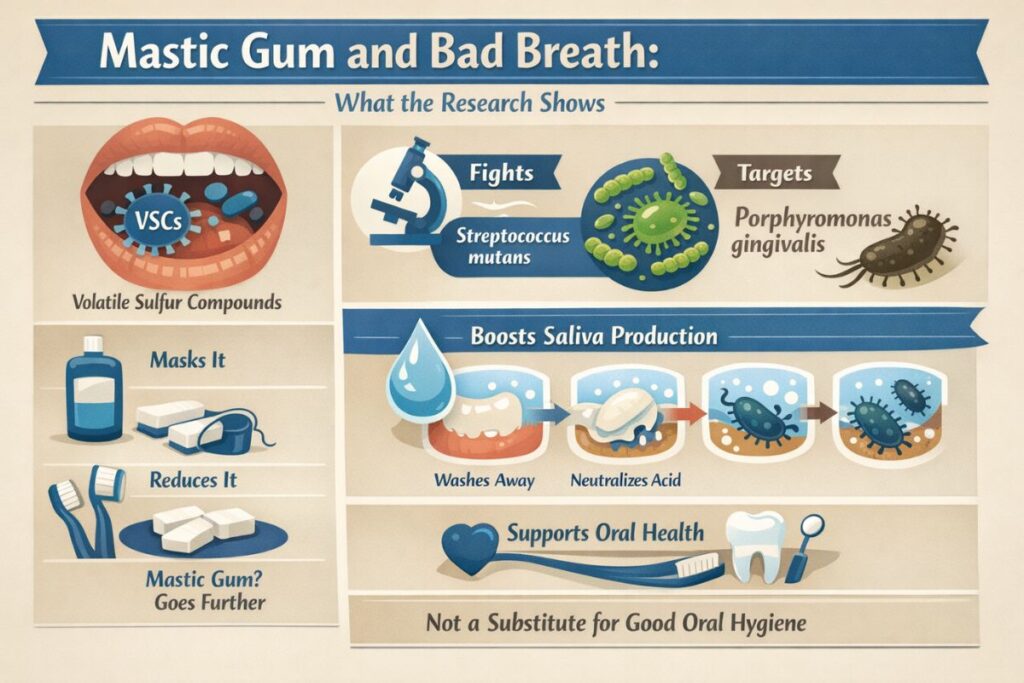
Chronic bad breath, clinically known as halitosis, is caused by volatile sulfur compounds (VSCs) produced by bacteria in the back of the tongue, between teeth, and in the gum pockets. Mouthwash masks it. Good brushing and flossing reduce it. But mastic gum? It may go a step further.
A study published in the Journal of Oral and Maxillofacial Research found that mastic gum demonstrated significant antibacterial activity against Streptococcus mutans, one of the key bacteria involved in oral infections. Another study noted its activity against Porphyromonas gingivalis – a pathogen strongly linked to gum disease and persistent bad breath.
Chewing mastic gum also stimulates saliva production. Saliva is your mouth’s built-in defense system that washes away food debris, neutralizes acids, and keeps bacterial populations in check.
That said, mastic gum is not a breath treatment on its own. It doesn’t replace brushing, flossing, tongue scraping, or professional cleanings. Think of it as a supportive tool along with thorough periodontal care in Carrollton, not a solution.
Mastic Gum and Gum Disease: Promising, But Not a Cure
Gum disease, from early gingivitis to advanced periodontitis, is an inflammatory condition driven largely by bacterial buildup below the gumline. Left untreated, it can lead to bone loss, tooth mobility, and tooth loss.
Here’s where mastic gum’s anti-inflammatory and antimicrobial properties come into the picture. Several studies, including research published in Phytomedicine, suggest mastic extract can reduce markers of inflammation and inhibit bacterial growth. For mild gum irritation or early-stage gingivitis, incorporating mastic gum into your routine may offer some supportive benefit.
But if you’ve been told you have periodontitis or if you’re noticing swollen gums, bleeding when you brush, or gum recession, mastic gum alone won’t be enough. At that stage, you need professional intervention: scaling and root planing, targeted treatment, and consistent follow-up care.
Residents across the Carrollton area rely on periodontal care in Carrollton at Flink Family Dentistry for exactly this kind of structured, evidence-based treatment. There’s no natural supplement that replaces that level of care once gum disease has progressed.
What Mastic Gum Can and Can’t Do: A Clear Breakdown
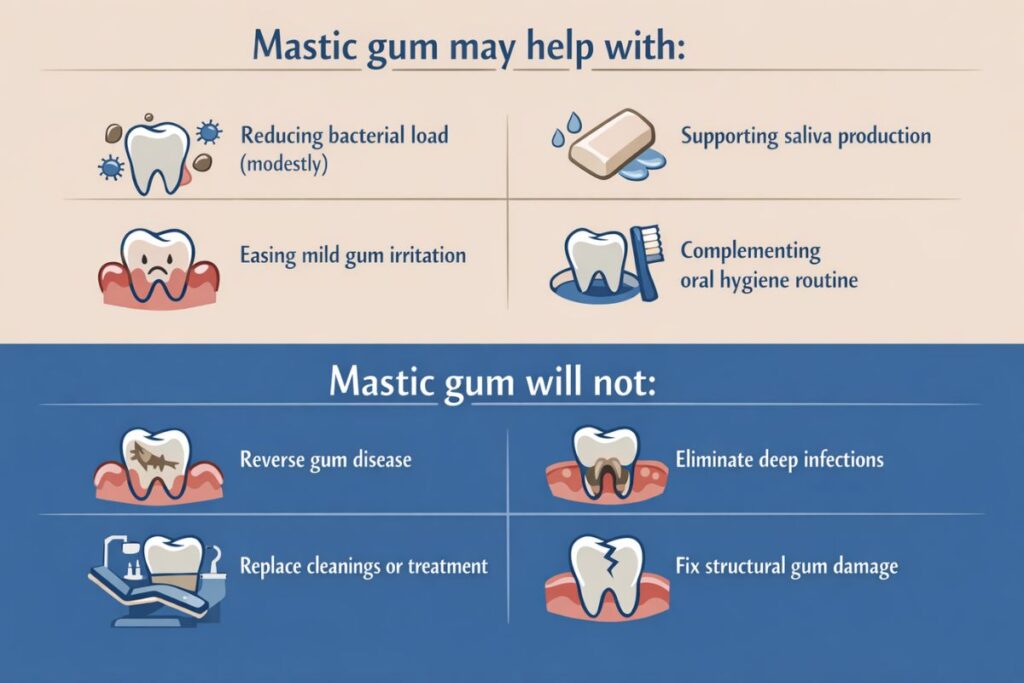
To keep this practical, here’s an honest summary:
Mastic gum may help with:
- Reducing bacterial load in the mouth (modestly)
- Supporting saliva production through chewing
- Easing mild gum irritation
- Complementing a solid oral hygiene routine
Mastic gum will not:
- Reverse gum disease on its own
- Eliminate deep bacterial infections below the gumline
- Replace professional cleanings or periodontal treatment
- Fix structural gum damage
Think of it the way you’d think of a healthy diet in relation to heart health, beneficial and worth doing, but not a substitute for a cardiologist when something’s actually wrong.
How to Use Mastic Gum Safely
If you want to add mastic gum to your oral health routine, a few practical notes:
- Choose pure mastic resin, not heavily sweetened commercial products
- Chew it for 10–15 minutes after meals, similar to xylitol gum
- Don’t use it as a substitute for flossing or brushing, it works alongside those habits
- Check with your dentist first if you have existing gum disease, crowns, or other dental work
Some people experience mild jaw soreness initially, since mastication starts quite firm before softening. That’s normal and passes quickly.
Don’t Skip Your Gum Evaluation
Here’s something worth knowing: gum disease is often painless in its early stages. Many people don’t realize they have it until it’s already progressing. In fact, the CDC estimates that nearly half of American adults over 30 have some form of periodontal disease.
If you’re in the Carrollton, TX area, whether you’re near George Bush Turnpike, Old Denton Road, or anywhere in between getting your gums properly evaluated is one of the smartest things you can do for your long-term oral health. Periodontal care in Carrollton at Flink Family Dentistry combines clinical precision with a genuinely caring approach. The team takes the time to assess your gum health thoroughly and walk you through your options, no pressure, no unnecessary treatment.
Mastic gum is a legitimate, research-supported natural remedy with real antimicrobial and anti-inflammatory properties. It can be a worthwhile addition to your daily oral hygiene routine, particularly if you’re dealing with mild gum sensitivity or want extra support against bacteria that cause bad breath.
But it’s not magic. And it doesn’t replace professional dental care when gum health is in question.
If you’re ready to take your gum health seriously, the team at Flink Family Dentistry in Carrollton is here to help. Schedule your periodontal evaluation today and get a clear, honest picture of where your gum health stands.
People Also Ask
Q: Can mastic gum replace my regular dental cleanings?
No. Professional cleanings remove hardened tartar (calculus) that no amount of chewing, brushing, or natural remedies can dislodge. Mastic gum may support your oral hygiene between visits, but it doesn’t substitute for what a dental hygienist removes during a cleaning.
Q: Is mastic gum safe for people with tree nut allergies?
Mastic comes from the Pistacia tree, which is in the same botanical family as pistachios. If you have a tree nut allergy to pistachios, talk to your doctor before using mastic resin. Individual sensitivities vary.
Q: How long does it take to notice any benefit from mastic gum?
Most people who use mastic gum consistently for 2-4 weeks report subtle improvements in breath freshness and less gum sensitivity. However, results vary based on your overall oral hygiene habits and baseline gum health.
Q: Does mastic gum interact with dental materials like fillings or crowns?
There’s no strong evidence that mastic gum damages dental restorations, but the resin can be sticky when chewed for the first time. If you have temporary crowns, bridges, or loose restorations, check with your dentist before chewing any gum.
Q: Is mastic gum the same as regular chewing gum with xylitol?
No, they’re different products with different mechanisms. Xylitol gum reduces cavity-causing bacteria through a sugar alcohol mechanism. Mastic gum works through natural antimicrobial compounds in the resin itself. Some people use both, xylitol gum after meals and mastic gum at other times, though there’s no established protocol for combining them.