
1930 E. Rosemeade Pkwy #103 Carrollton, TX 75007



Tooth pain has a way of demanding your full attention. Whether it wakes you up at 3 a.m. or stops you from enjoying your favorite snacks during the workday, the urge to grab anything nearby that might help is completely understandable. Cloves or more commonly, clove oil have been a go-to home remedy for centuries. And yes, they actually give you relief from pain. But there’s an important gap between “pain relief” and “treating the cause of pain.”
This blog breaks down what cloves can and can’t do for a toothache, when to stop relying on them, and what to do when the pain isn’t going away on its own.
What Makes Cloves Work on a Toothache?
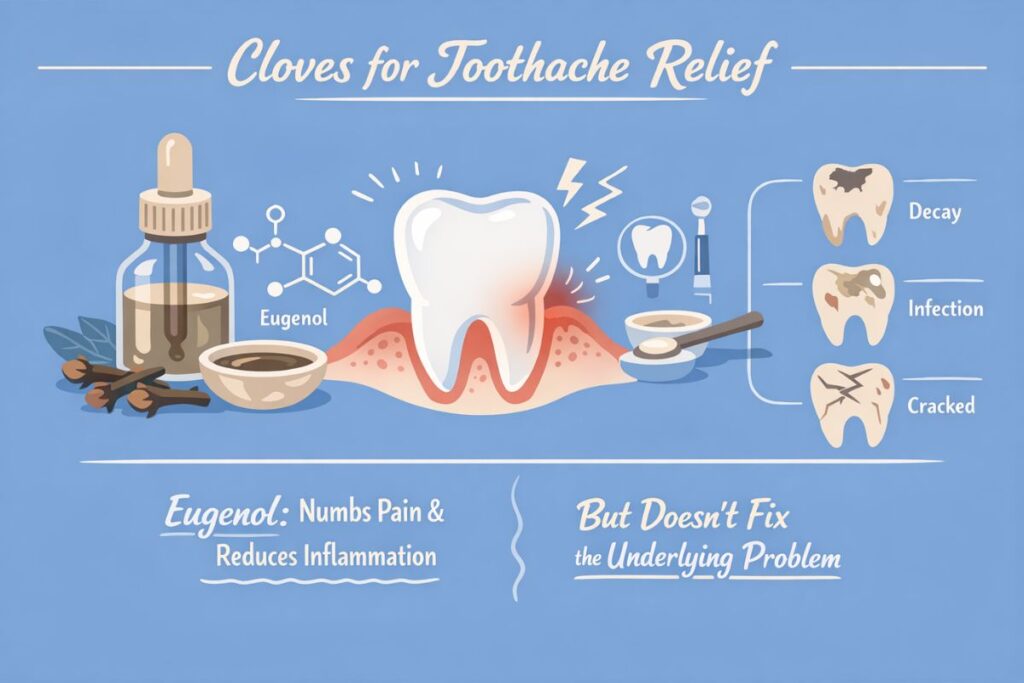
Cloves contain a compound called eugenol, a naturally occurring anesthetic and antiseptic. When applied directly to a sore tooth or inflamed gum, eugenol temporarily blocks pain signals and reduces minor inflammation. That’s why clove oil has appeared in dental offices as a component in certain cements and dry socket treatments for decades.
But “temporarily” is the phrase here that you must take into account. Eugenol doesn’t treat the underlying cause of your pain. It relieves the nerves. But the problem is, it doesn’t treat decay, infection, a cracked tooth, or whatever is causing the pain.
How to Use Clove Oil Safely at Home
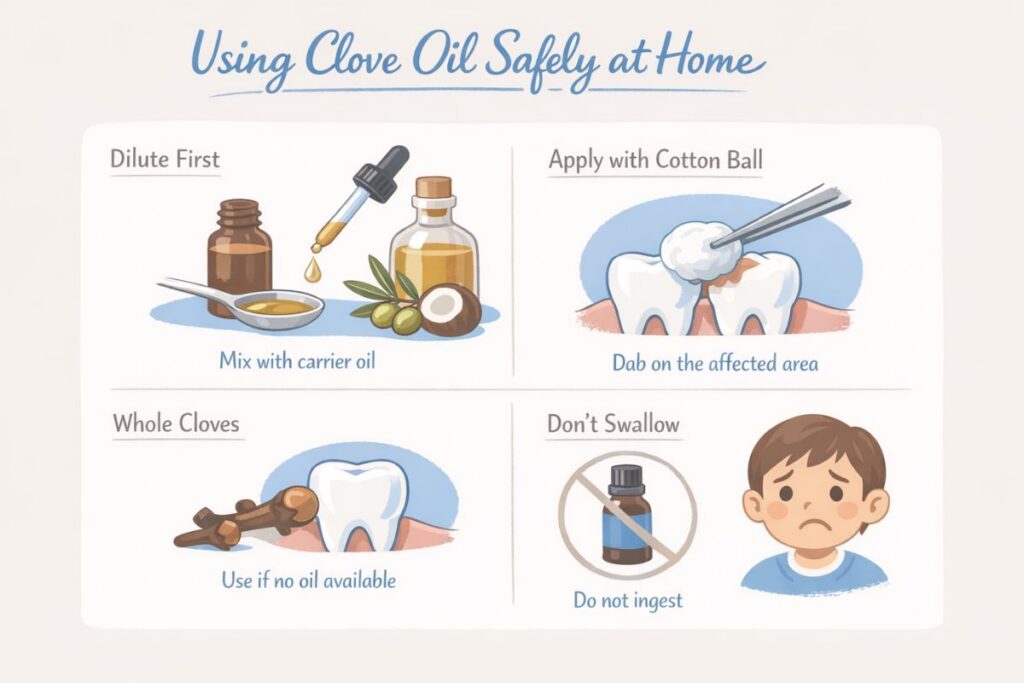
If you’re going to use cloves while you wait for a dental appointment, how you use them matters. Clove oil can also irritate your gum tissue and make your dental health worse.
Here’s how to do it right:
- Dilute first: Mix clove oil with a neutral carrier oil like coconut or olive oil (roughly 1 drop of clove oil per teaspoon of carrier). Pure, undiluted clove oil is too strong for direct tissue contact.
- Apply with a cotton ball: Dab it gently on the affected tooth and surrounding gum. Don’t let it sit on soft tissue for more than a few minutes.
- Whole cloves as backup: If you don’t have oil, placing a whole clove against the tooth and gently biting down can release a small amount of eugenol. It’s less precise but better than nothing.
- Don’t swallow: Clove oil should never be ingested, especially in children.
When Cloves Aren’t Enough
Signs the Pain Needs Professional Attention
There’s a difference between mild tooth sensitivity and pain that signals real damage or infection. If you’re dealing with any of the following, clove oil is only delaying the care you actually need, and an emergency dentist in Carrollton is the right call.
- Pain that’s sharp, throbbing, or radiating to your jaw, ear, or neck
- Swelling in your cheek, gum, or jaw
- Fever alongside the toothache
- A visible abscess, bump, or pimple-like sore on the gum
- Pain that persists for more than one to two days despite home care
- Difficulty opening your mouth or swallowing
A dental abscess, for example, won’t resolve on its own. Left untreated, the infection can spread beyond the tooth into surrounding tissue and, in severe cases, further. According to the American Dental Association, dental emergencies account for over 2 million emergency department visits annually in the U.S. Most of those visits involve pain and infection that started small.
What’s Causing Your Tooth Pain?
Knowing why your tooth hurts helps you understand what kind of treatment it needs. Clove oil might calm a sensitive tooth, but it won’t fix a cavity, reverse nerve damage, or treat a cracked molar. Here are the most common culprits:
- Tooth decay: Bacteria erode enamel, exposing the sensitive inner layers. Pain worsens with sweet, cold, or hot foods.
- Dental pulp infection: Bacteria reach the pulp, causing significant pain, often requiring root canal therapy.
- Cracked tooth syndrome: A fracture that isn’t always visible on X-rays but causes sharp pain when biting.
- Gum disease (periodontitis): Infected gum tissue causes aching, recession, and bone loss over time.
- Impacted wisdom teeth: Pressure from a tooth that hasn’t fully erupted can cause pain in the back of the mouth.
None of these resolves without care at a dentist’s office. Eugenol can reduce how much you feel them, but only for so long.
So Temporary Relief or Real Solution?
Cloves are a legitimate short-term tool. They don’t belong in the category of internet myths or ineffective folklore. But they belong in the category of “bridge care”, something you use while getting to a dentist, not instead of going.
Think of it this way: if your car had a slow oil leak and you added more oil to get home safely, you still need a mechanic. Cloves work the same way for tooth pain. They can help you get through the night. They can’t fix what’s broken.
Don’t Let Pain Call the Shots
If your toothache has been lingering, or if it came on suddenly and is sharp, don’t keep managing it with a cotton ball soaked in clove oil. Real, lasting relief starts with a proper diagnosis. Contact Flink Family Dentistry today, we see emergency patients and will get to the root of what’s happening, so you can get back to your day without the distraction of pain.
People Also Ask
1. Is clove oil safe for children with tooth pain?
Clove oil should be avoided in young children. Eugenol can be toxic if swallowed, and children are more likely to ingest it accidentally. For pediatric tooth pain, contact your dentist directly rather than attempting home remedies.
2. How long does clove oil’s numbing effect last?
The relief from clove oil typically lasts between 20 minutes to a few hours, depending on the severity of the pain and how much eugenol reaches the affected area. It varies person to person. The effect is temporary and will fade as the active compound disperses.
3. Can I use cloves if I’m allergic to certain anesthetics?
Eugenol can cause allergic reactions in some individuals, including those with sensitivities to certain plant-based compounds. If you’ve had reactions to dental cements, certain herbal products, or spices before, check with your dentist before using clove oil at home.s if I’m allergic to certain anesthetics?
4. What’s the difference between tooth sensitivity and a dental emergency?
Tooth sensitivity is brief and triggered by a stimulus like cold water or a sweet food. It fades quickly. A dental emergency involves pain that’s persistent, throbbing, worsening, or accompanied by swelling, fever, or pus. If you’re unsure which category your pain falls into, calling your dentist to describe your symptoms is always the right first step.